|
|
Our analysis shows that if communicators change how they talk about their technologies they can turn neutral commentators into advocates.
Nearly a third of Europeans have a negative reaction to natural gas. Meanwhile, we’re relying on it more than ever as our only realistic route to phasing out coal in the near term.
SJR’s latest analysis of energy chatter on Twitter reveals a disconnect between our emotional sentiment and society’s real energy needs—which is an opportunity for communicators in this space.
We rely on energy for nearly everything we do. To build more positive sentiment, energy technologists need to connect the act of generating energy with the benefits it brings to people’s lives.
Wind power is a perfect example. That technology today provides more energy than any other renewable source, yet received the highest share of detractors among the renewable technologies in the Twitter energy conversation.
Bridging that disconnect between negative audience sentiment and real-life benefit is the challenge (read: opportunity) for communicators.
Getting talked about, in a good way
Sentiment doesn’t always lead to conversation.
In analysing the data, we found that some technologies are simply not getting a share of the conversation equivalent to their contribution to the market or, more importantly, their potential as solutions to major energy issues.
The most under-discussed technology of all may be nuclear. It achieved just a 4.6% share of conversation (SoC), despite being responsible for 30.5% of primary energy production in Europe. Worse yet, it has the joint third highest share of active detractors, with 23% negative sentiment.
How can nuclear messengers address this situation?
Firstly, there is a clear need to simply communicate more. Increasing the volume of owned content being published is the first step towards building a better share of conversation.
Secondly, that content needs to kickstart a positive narrative detailing the beneficial advances of a technology that evidently has an activated opposition lobby.
Finally, with gas imports dominating the European energy conversation (see Fig.1), those nuclear communicators should be positioning the technology as a viable, and cleaner, alternative to gas-fired power plants.
As with wind power, the nuclear story needs telling and filling that content void will help bridge the chasm between sentiment and real-world benefits.
The opportunity to drive (or even start) that conversation around energy—which is one of the most dynamic issues facing us today—can seem daunting. But, knowing your audience and where they stand is the first step in meeting them in a space where they are open to seeing the benefits of any particular energy technology.
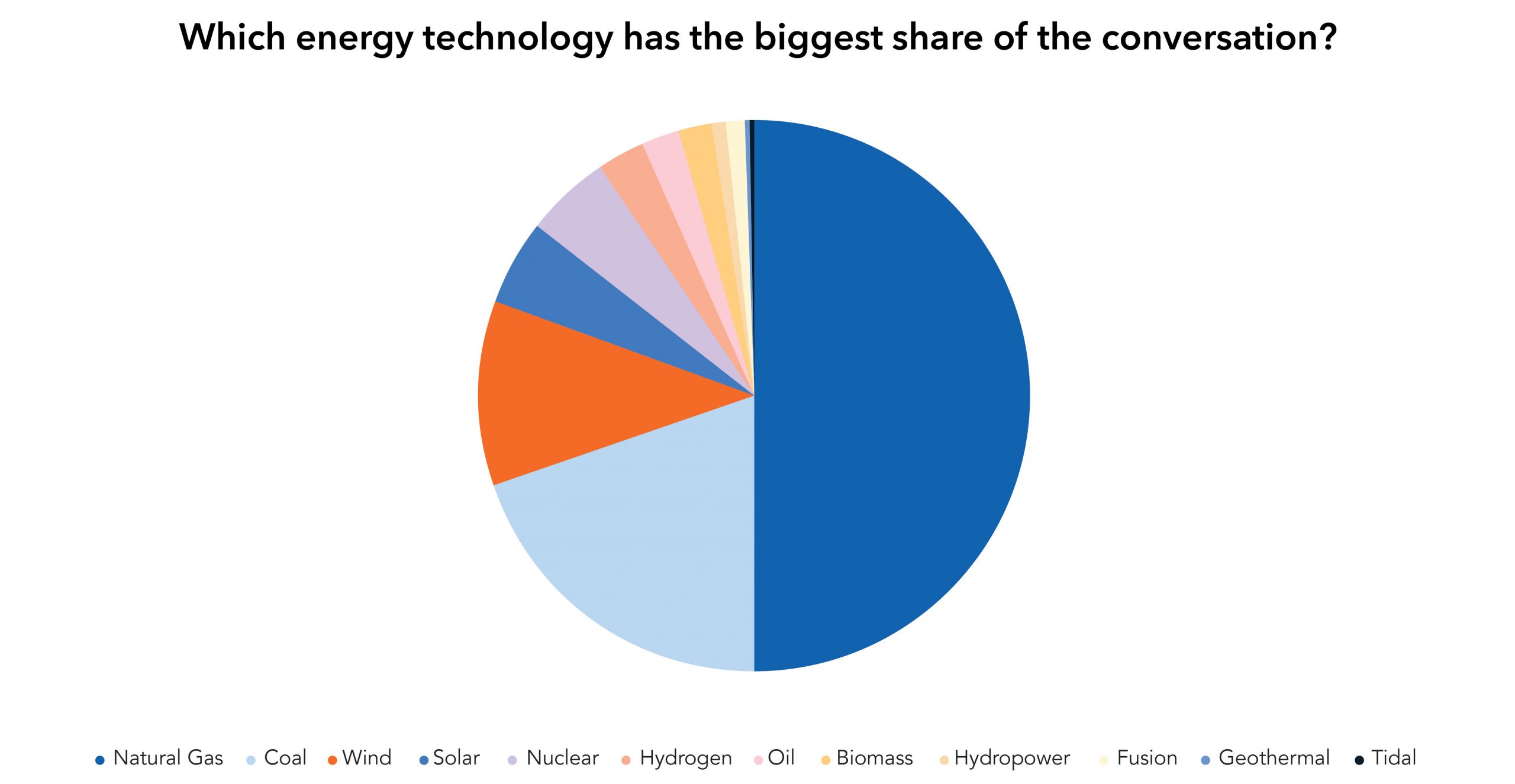
Europe’s Energy Convo Pie Chart (Fig. 1)
Europe’s energy conversation[1] is currently dominated by the topic of natural gas—undoubtedly driven by concerns about Europe’s gas supply caused by the war in Ukraine. #Russia and #Ukraine are the top associated hashtags. Coal concurrently registered as the second most talked-about energy source, as governments make emergency U-turns on plans to phase-out coal to offset constrained gas supplies.
Despite the effects of climate change leading media narratives, the main renewables technologies collectively achieved only a 19.7% share of conversation (SoC). The relatively minimal discussion of solar is particularly surprising. Europe’s fastest growing source of renewable energy only gathered a 5.3% SoC overall. Wind energy accounted for more than half of all mentions of primary renewables. However, associated sentiment suggests a not insignificant number of detractors, with 19% of wind posts classed as negative, the highest of all renewables.
[1] SJR’s analysis measured mentions of and sentiment towards each primary energy technology (+ hydrogen) on the European Twittersphere between 1 May and 31 July, 2022.